There is consensus in the international community that public education in the United States is in bad shape. Americans are constantly reminded that they trail other developed countries in educational rankings.
Teachers’ unions are an integral part of the American public school education system. There has been much debate over whether the unions in fact hinder the education of American students. While teachers have a right to unionize and collectively look out for their profession, certain changes must be made to this approach. These changes should include reforming the pay system for teachers, abolishing tenure, and changing the way in which agreements between teachers and Boards of Education are enacted.
The system of pay for unionized teachers seems almost bizarre to those who are familiar with private enterprise. While in the private sector raises and layoffs depend on the quality of work, this is not the case with teachers. Teachers’ pay is determined essentially by how long they have had their jobs. Moreover, if a school board has to layoff teachers due to budget cuts or other administrative reasons, junior teachers are routinely fired before more senior faculty, regardless of capability. It seems only logical that a merit system be enacted for the good of the students, not to mention fairness to the teachers. There are different ways in which it could be set up: the easiest would be to benchmark teachers against an average performance level and reward those who perform above it. However, this proposal would probably be torn apart by unions as it represents a radical departure from the status quo. Even if the unions conceded, they would just negotiate a ludicrously-low bar. This standard level for teachers would have to be instituted on a governmental basis, with objective comparisons that would include other developed countries.
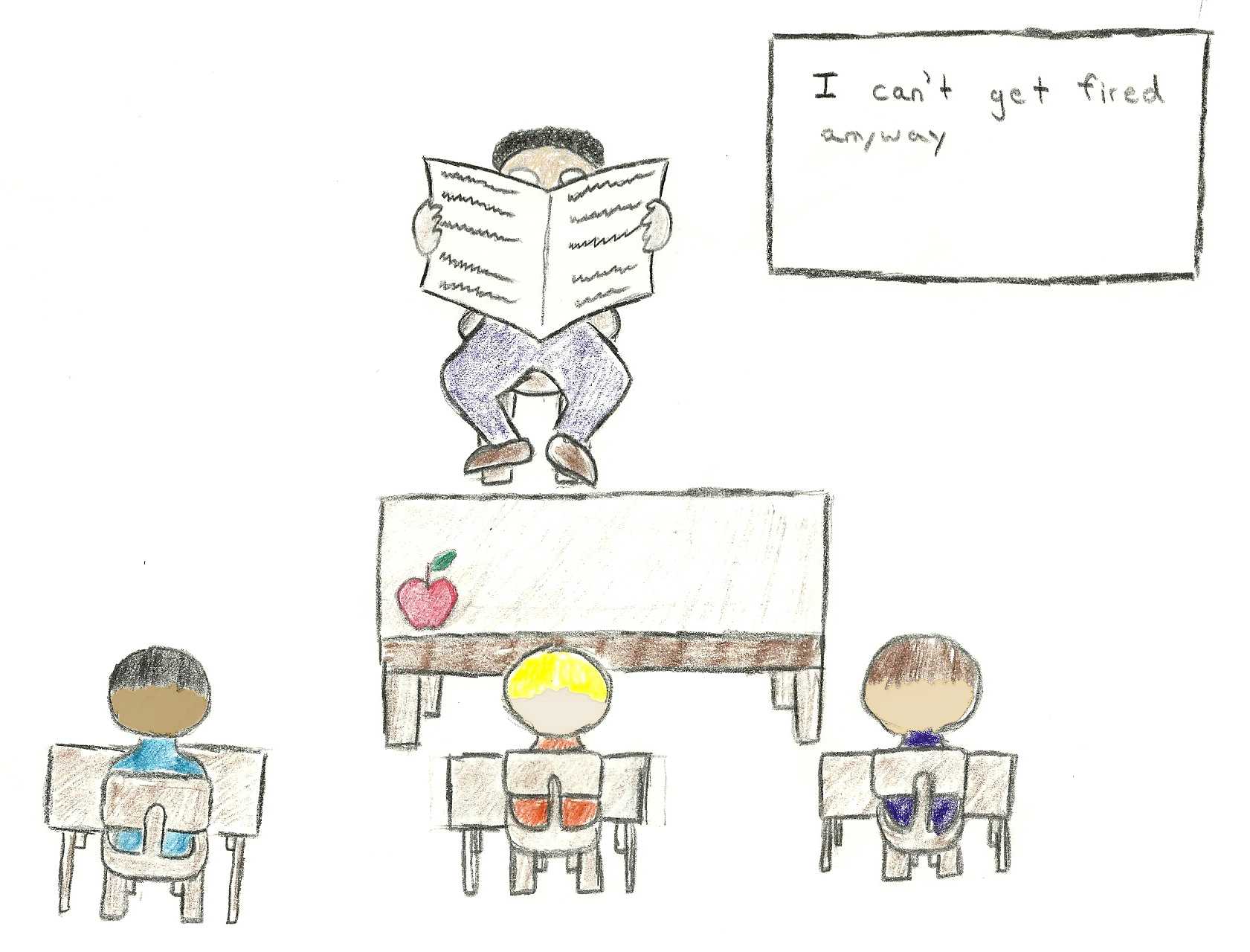
As for tenure, change is also needed. In colleges, tenure is given to those who publish research, create polices, and teach well, among other criteria. In contrast, the tenure track for a unionized primary or secondary school teacher takes a mere 2 or 3 years to complete and is relatively easy to “earn.” Once a teacher is tenured, it is remarkably difficult to fire the individual. While this is not the intended purpose of tenure, there have been incidents of union-protected teachers sexually-abusing students and yet still retaining their teaching positions. Tenure is now sacred to teachers’ unions because the unions know just how many bad teachers they protect. For example, the Washington D.C. school district’s chancellor, Michelle Rhee, offered up to $40,000 in pay raises to teachers who would give up tenure. Yet, the unions refused. Clearly the unions were concerned that the low teaching quality of these teachers would cause them to be fired without tenure.
Teachers’ unions pose a special problem because unlike most other workers unions, their members offer an essential public service. They are not working for factories. Unions consistently shield bad teachers due to their “one size fits all” policy. Perhaps the measures that independent schools such as Newark Academy have enacted in collaboration with their teachers are good ideas for directors of the public school system to consider. These measures include contracts that require performance standards to be maintained in return for the teachers’ freedom to tailor their own curriculum and choose their modes of instruction.
It would be unfair to say that teachers’ unions are the only source of flaws in our public school system. Heavily unionized areas such as Massachusetts and New York have knowledge assessment scores among the top in the nation. Poverty, parental neglect of children’s academic needs, and ineffective curricula also contribute to the decline. However, it is irrefutable that teachers’ unions fail to consider the educational future of the United States. While these unions deserve the right to represent their members, the implementation of reforms is direly needed.
Leave a Reply
You must be logged in to post a comment.