Jadyn Soares ’25, Editor-in-Chief

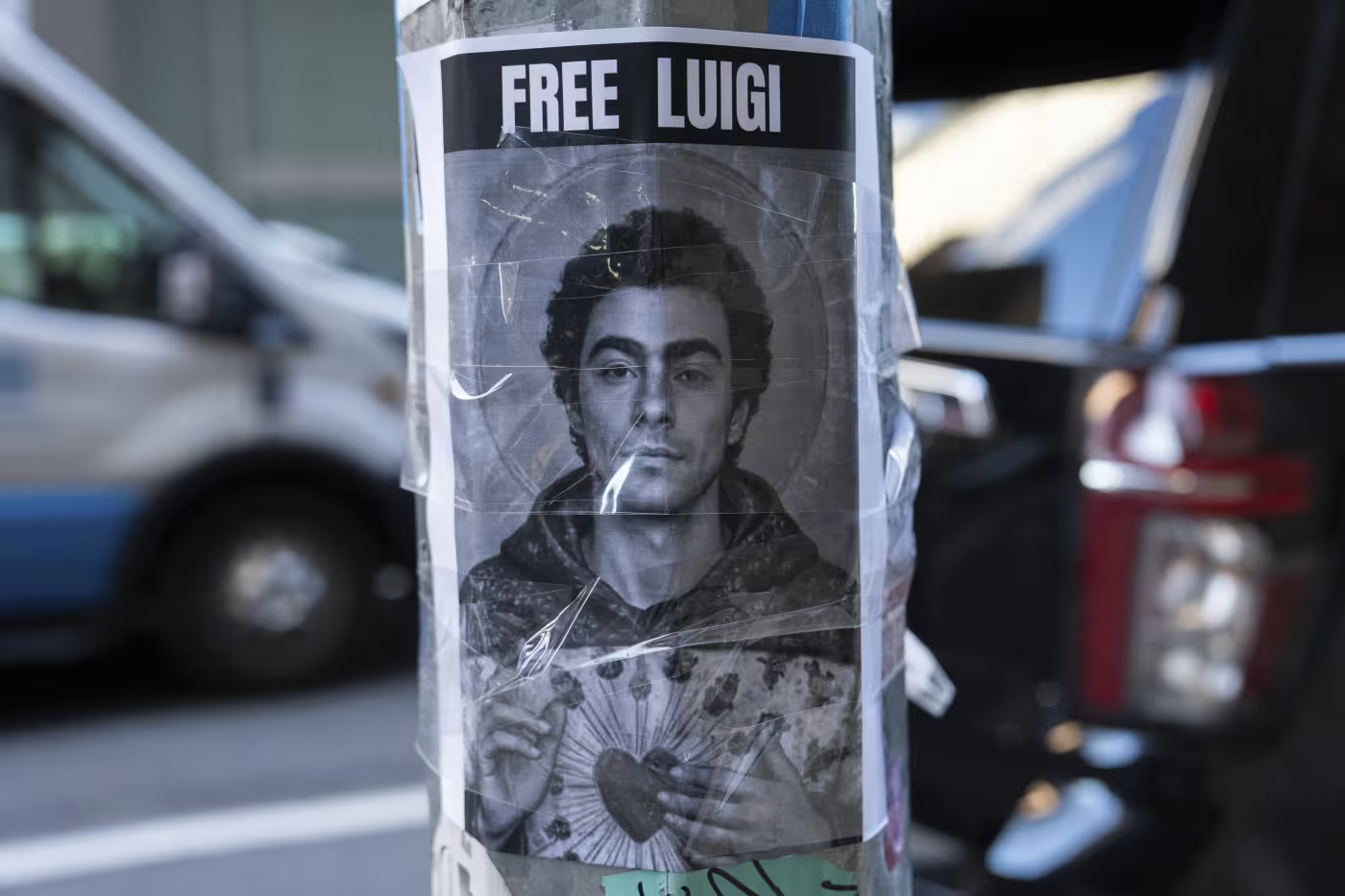
“Free Luigi” poster plastered outside the New York Hilton Midtown hotel
(Image courtesy of The Wall Street Journal)
Following the shooting of UnitedHealthcare CEO Brian Thompson in early December, Luigi Mangione has quickly become the center of public attention. Yet, instead of being framed as a cold-blooded murderer, Mangione, Thompson’s killer, has found himself the subject of folk ballads, fan fiction, “Hear-Me-Out” cakes, “Free Luigi” merch, and a frenzied online fandom — a sort of folk hero.
Perhaps the most notable part of this cultural phenomenon, though, is the way Mangione has been embraced as an anti-hero. His backstory, as a young, Ivy League-graduate from a wealthy family, has somehow made him a more sympathetic character. The internet has romanticized Mangione’s narrative, idolizing him and his actions.
The general takeaway is clear: many are supporters of violent opposition to the healthcare system. Americans have long grappled with the crushing weight of medical bills, denied claims, and the bureaucratic nightmare that is private insurance.
Mangione, with his charismatic background, has quickly and easily become an avatar of this popular rage, which UnHerd writes is “not the rage of political extremists or ideological zealots; it is the rage of the normie […] Mangione’s crime was remarkably effective. His purpose in killing Thompson was instantly obvious, and it was welcomed.” Per a recent poll by Newsweek, “nearly 30% of registered voters” understand Luigi Mangione’s alleged anger with UnitedHealthcare.
This cultural embrace has sparked a heated debate. On one hand, Mangione’s supporters argue that his actions — while extreme — suggest that only violent gestures are able to impact the broken U.S. healthcare system. On the other hand, critics worry about the implications of normalized violence and the dangers of elevating a man accused of murder into a martyr.
But the fascination with Mangione is larger than just him; it’s about the desperation he represents. To many, his story isn’t one of vengeance, but resistance — standing up to a system that seems to value profits over people. Fan fiction and folk ballads may seem frivolous, but they reflect a deeper, collective yearning for justice, however imperfectly expressed.
As Mangione’s trial approaches, the “Free Luigi” movement shows little signs of slowing down. Whether viewed as a symptom of public discontent or a troubling sign of cultural decay, one thing is clear: Mangione has tapped into a rage that will have notable influence on his trial and society as a whole.
Folk heroes are rarely perfect — often flawed, messy, and born from extraordinary circumstances. Mangione’s story is certainly not one of righteousness, but it is one of palpable frustration, and perhaps that is why so many are willing to embrace it.
Leave a Reply
You must be logged in to post a comment.