By Ellen Fishbein ’11, Staff Writer
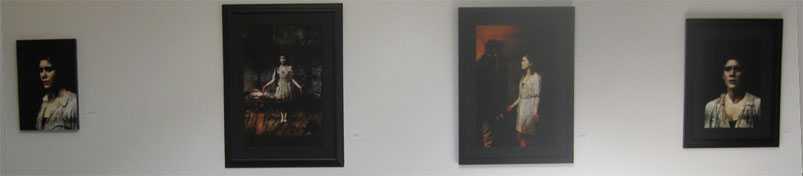
What do you feel like when you wake up after a confusing dream? Aside from the cold sweats and rushing heartbeats we experience after a nightmare, most of us wake up from dreams grasping at fleeting images we can’t always identify or correlate. To most of us, there is no neat, universal ‘dream logic’ that explains the images and feelings we retain when we wake up. Yet, artist Jay Gidwitz defies the norm in his senior thesis series called Dream Logic. The pieces, which are the showcase of the art gallery’s current submission, include The Condemned Man, portraying a man with a chain wrapped around his wrists and Erich Zahn in the Netherworld, a portrait of the pale girl floating in an abstract landscape. In his artist statement, Jay says he tried, through the series, “to capture the surreal and mysterious world of dreams and the unconscious, the images that appear as you float towards the periphery of consciousness.” The digital paintings (a mix of photography and digital art) are meant to give the viewer the impression that he is looking at an image from a dream—something distant enough to seem foreign, but close enough to trigger emotional reactions.
The Sigils is another series sampled in the exhibit. In the Western Occultist tradition, sigils are symbols considered magical. A sigil is created through ritual, and then exists on a separate metaphysical plane to run its course. To Jay, sigils metaphorically represent corporate manipulation and prejudice. In the paintings, “the symbols projected on the figures represent our abstract concepts, thoughts, desires or fears that we project onto other people.” He communicates through his art that although we try to escape the labels society gives us, they are as fluid as light and shadow, and they move with us despite our efforts.
Jay’s exhibit is not a ‘happy’ exhibit full of beautiful landscapes and bright portraiture. Instead, the art is cathartic and meditative, beautiful in its depth. His sense of composition looks effortless; nothing seems curiously out of place or out of focus. The exhibit goes beyond the ‘dark photography’ some art students practice in order to depart from ‘traditionally aesthetic’ paintings. The pieces make sense on their own as well as in series, and Jay handles serious subject matter with tact and poise, creating an exhibit that is both sophisticated and strikingly original.
Artist statements found on www.jaygidwitz.com
Information on Sigils found in Sigils, Servitors and Godforms: Part I from www.spiralnature.com
Leave a Reply
You must be logged in to post a comment.