By Varan Satchithanandan ‘12, Staff Writer
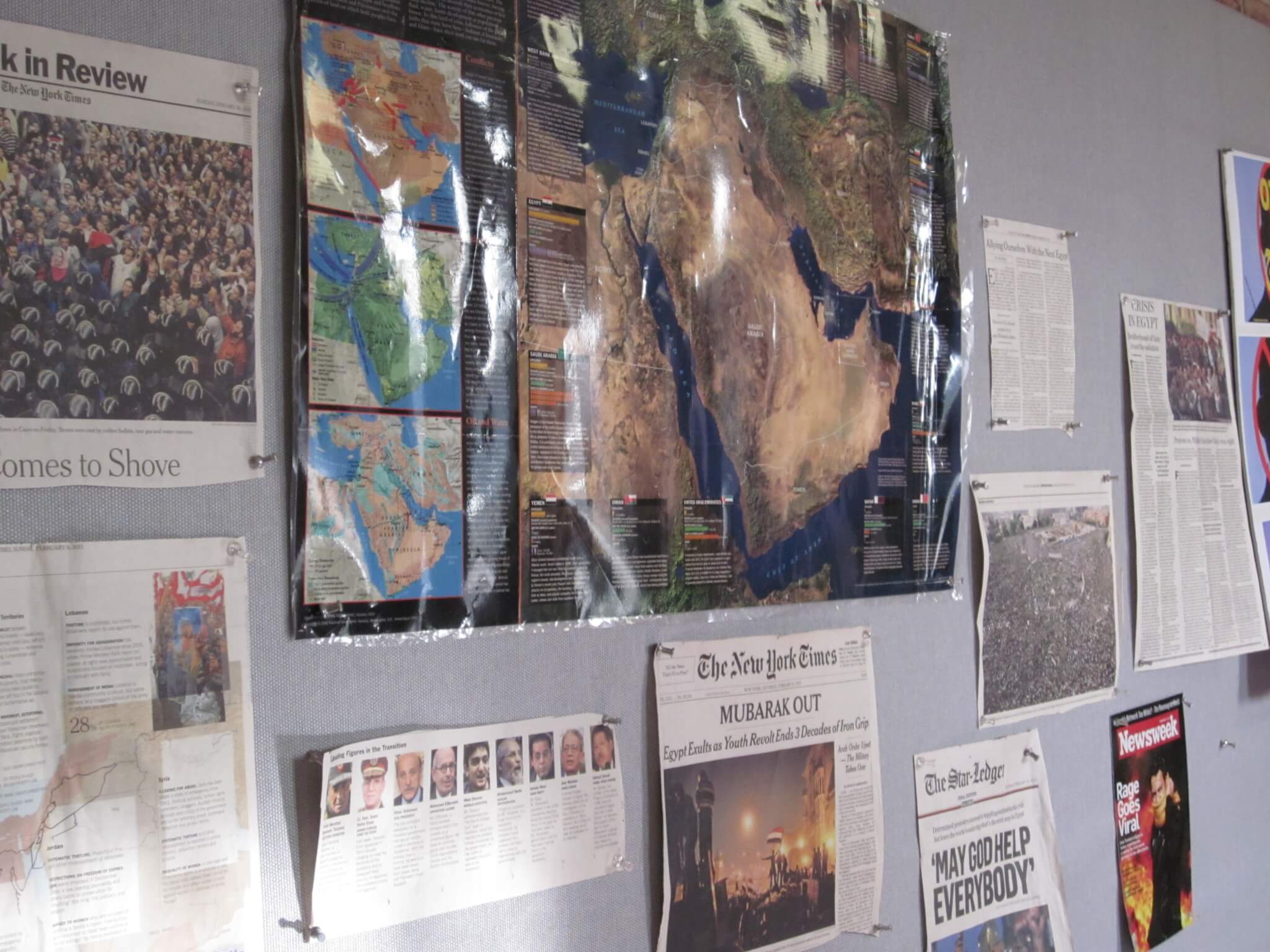
As many Newark Academy classes have recently been discussing, it is amazing that we, as Newark Academy community members, are able to witness a revolution developing in real time. Television images from Cairo have been providing fascinating footage for the last 18 days or so. With the news of President Mubarak stepping down and the high council of the military taking over, a new question has arisen: has there really been a revolution at all, or is this in reality a military coup d’état? To address this question, we need to first consider who the various actors in the situation are, and what each of them wants.
The main actor in Egypt is the army—it has produced and supported all the Egyptian presidents since 1952 when the Egyptian monarchy was toppled. It is safe to assume that they want to perpetuate their grip on the country. Mubarak and his close circle would have liked to hang on to power, or at the very least leave with dignity. Then there are those who wish to usher in a new era of democracy—the demonstrators and their spokesmen like Mohamed El Baradei. Finally, there’s the Muslim Brotherhood, which has been seemingly dormant recently, though many believe that they’re waiting for the right time to reassert power. Outside of Egypt, the United States is probably the only country with power to influence events. Israel, Iran, and other Arab states are obviously keen observers but do not have much influence.
Mubarak received nothing that he wanted. After several days of defiance, he had to flee the capital. Those who demanded democracy are celebrating Mubarak’s departure, but other than that, have not secured a real change. With the Egyptian constitution and parliament suspended for six months, it is difficult to argue that democracy in Egypt is secure. The Muslim Brotherhood would have an extremely hard time gaining power with a military junta in place. The army quite clearly has been victorious in this situation, as it has gained absolute power, at least for the next six months. The army is likely to maintain geopolitical relations, so the United States and other nations can rest easy for now. These countries’ biggest concern of the Muslim Brotherhood seizing power is not an immediate possibility. But with their key ally Mubarak gone, their influence is greatly reduced.
The current situation is clearly not what most parties wanted. Only the Egyptian army has come out ahead. If past history in Egypt or elsewhere is any indication, this is not a situation that engenders optimism for the prospects of democracy in Egypt. At any rate, we might have to wait six more months to find out where this revolution is really headed.
Leave a Reply
You must be logged in to post a comment.