By Trevor Williams ’13, Staff Writer
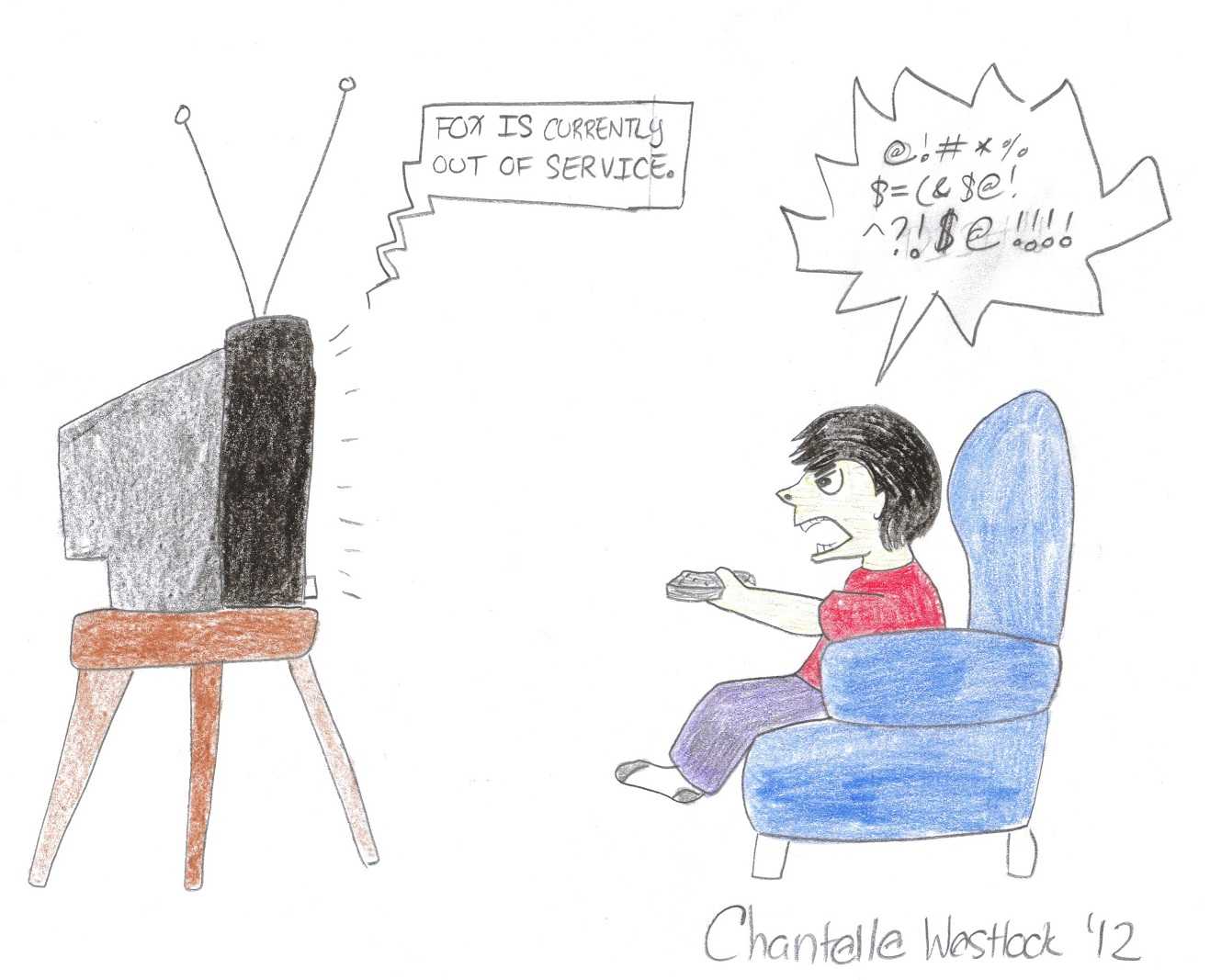
A bitter and ongoing contract dispute between Cablevision and the News Corporation, which owns the Fox Television Network, has resulted in a blackout of Fox broadcasts around the tri-state area. Some three million Cablevision subscribers in New York and New Jersey have been without Fox News since October 16, and until Cablevision and the News Corporation can come to an agreement on broadcasting fees, they will continue to miss programming from the channel.
In the grand scheme of things, of course, this is almost a non-issue. There are, after all, worse things than missing Glee, or the Giants’ game time. What makes it so frustrating is that there is virtually nothing the consumer can do about it. Sure, he or she can switch providers (at considerable inconvenience), but there exists no company that is immune to programming blackouts. Some contracts between Fox and Dish Network, for instance, will expire at the end of the month; if a new agreement cannot be reached, there will be a blackout similar to the one currently being experienced.
Cablevision currently pays $70 million annually to retransmit Fox, but the network now wants that fee to be increased to about $150 million. Doubtless, there is avarice on both sides. The News Corporation’s chief operating officer was quoted in the New York Times as saying that “the broadcast networks have for too long accepted being second class citizens.” Meanwhile, his company posts annual revenues tallying $33 billion. Cablevision, however, has blatantly violated millions of television contracts by failing to deliver a promised service.
There is a simple solution that must be put into effect – to force the issue. A third party must be called on to settle the dispute by binding arbitration. Each company gives a price, and the third party examines the merits of each case before deciding which one is fair. That’s the key element, though. The third party must select one price or the other; there is no middle ground. In such a fashion, the contract dispute would be settled expeditiously.
November 4, 2010 Update:
The blackout did finally end after fifteen days. Cablevision and Fox agreed to a contract on October 30, the terms of which were not disclosed. Regardless, it came too late for some of us; collectively, over one billion hours of television programming were lost. What was it for — more arm-twisting between two multibillion-dollar corporations?
A change must be made to the system. If the several blackouts over the past few months are any indication, the FCC’s seeming disinterest in helping arbitrate or resolve the blackout does not bode well for the future. Without a push by some outside body — the government, for example — other blackouts are sure to follow.
Moreover, the positions of cable companies and television networks grow progressively weaker. As more and more users watch television on the Internet, the power and leverage held by the television conglomerates shrinks. Alienating consumers will only bring them farther along on the road to insolvency.
So how does all of this relate to us? Though most Newark Academy students have little time to watch television, to us, the blackout isn’t about missing fifteen days of Channel 5 WNYW. It’s not even about corporate greed. It’s about failure to deliver, and the consequences of that failure.
Returning NA students might recall the “fiasco” last February, when the school intranet was down for a couple of days. It was an inconvenience. Yet it served as a reminder that we remain very vulnerable to the “failure” of things beyond our control. What if the Internet had been down for a week? Two weeks? Unlikely, of course, but it is not completely impossible. The threat of future paralysis from a system’s failure, especially a technology-related system failure, is an unfortunate byproduct of our reliance on these systems. The only way to lessen that risk is to wean ourselves from them.
Leave a Reply
You must be logged in to post a comment.