By George Haglund ’16, Middle School Student
In my 7th grade American Studies class, we were asked to come up with a topic that we cared about and could improve, and find some way to make change. My group, George Haglund, Olimpia Kane, Noah Peace, Noah Sellinger, Neora Shiffrin, Rory Tell, Rachel Wilf, chose to focus on environmentalism. We decided that the best way to make change was to reduce the amount of paper used at Newark Academy. My group members and I believed that if we could remind the school community of the effect we have on our environment by using excess amounts of paper, they would realize the folly of their ways and stop.
Over the course of a week, my fellow group members and I collected data about the amount of paper used in each of our classes. These papers included notes, assignment sheets, handouts, and homework. Once the data was compiled, we decided that Newark Academy needs to lessen its paper usage. Approximately forty sheets of paper were used per student during a week. Much of this paper was used for things that could have been given to the students in other ways that involve less paper. Many students at NA feel strongly about using too much paper. When asked about his opinions on the unnecessary use of paper in Newark
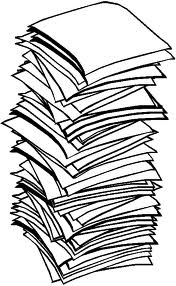
Academy, 7th grade student, Noah Peace commented, “Newark Academy is already an environmentally conscious school, however there is plenty of room for improvement.”
Paper use as a cause of deforestation is a big topic in today’s growing world and is a leading cause of global climate change. Every year, 5 million acres of forest in America are cut down to make paper (an area roughly the size of New Jersey). One acre of trees can absorb up to 5 tons of carbon dioxide in one year. This means that every year, 25 million tons of carbon dioxide is not sequestered, in addition to all the carbon dioxide released when the trees are cut down. Not only is this carbon dioxide released by the trees, paper factories then produce even more carbon dioxide. Even small amounts of paper contribute to this vicious cycle.
Thanks to the technology that we have today, it is even easier to use less paper than it was only a few years ago. Rachel Wilf, a 7th grade student, believes, “less is more. If we use less paper, we will have a nicer environment.” But how should we go about this? According to 7th grade student, Noah Sellinger, “By turning in homework online, paper use should be reduced greatly.” In the future, not only should homework be turned in online, but that notes, handouts, study guides, as well as text books should all be posted online, instead of printed out fifty times and given to students. Computers should be utilized in class. This approach would be beneficial to everyone in a variety of ways. Students would only need to carry around a laptop, instead of a fifty pound backpack. Teachers would save time by not having to print packets. The school would save money on paper and ink. Carbon dioxide levels would be reduced and forests could grow back.The positive impact we can have, if we just use less paper is astounding. Personally, one of the ways I use less paper is by using an iPad. Using it in all my classes, I have not only reduced the amount of paper I use, but been able to write better, more complete (and readable!) notes as well. Not only can we all help the environment by using less paper in the classroom, but paper saving technologies can also improve the way we learn.
Leave a Reply
You must be logged in to post a comment.