By Shreya Srivastava ’13, Staff Writer
Every ninth grader at Newark Academy is required to complete a sexual education course in which he or she is taught more than just the merits of abstinence. The students at NA learn contraceptive methods to prevent pregnancy and sexually transmitted infections. Newark Academy not only tells students not to engage in sexual activity at a young age, but also makes them aware of and prepared for the consequences.
However, not all schools teach such methods. Many are limited to the abstinence lecture due to religious reasons. In fact, National Public Radio (NPR) has reported several cases in which religious leaders have contacted local public schools and asked that they teach only abstinence; many parents are in favor of these teaching methods. Many parochial schools, like Archdiocese of Detroit, also focus mainly on abstinence in sexual education.
Yet, there was recently an insurrection by female high school students demanding to learn more than just the abstinence principle. Unfortunately, the school refused to expand their curriculum. Although the strict “No Sex” method is implemented by many schools, research has shown that such education has proved unsuccessful when trying to persuade teenagers to stay away from the potentially life changing activity.
Such methods and content of teaching vary greatly from what students learn at Newark Academy. Some member of the NA community might have noticed the “Abstinence” poster hanging outside of Ms. Spooner’s office. This poster does more than just advertise abstinence. It talks about defining abstinence for yourself, taking things at your own pace, and not fall prey to the pressure of others.
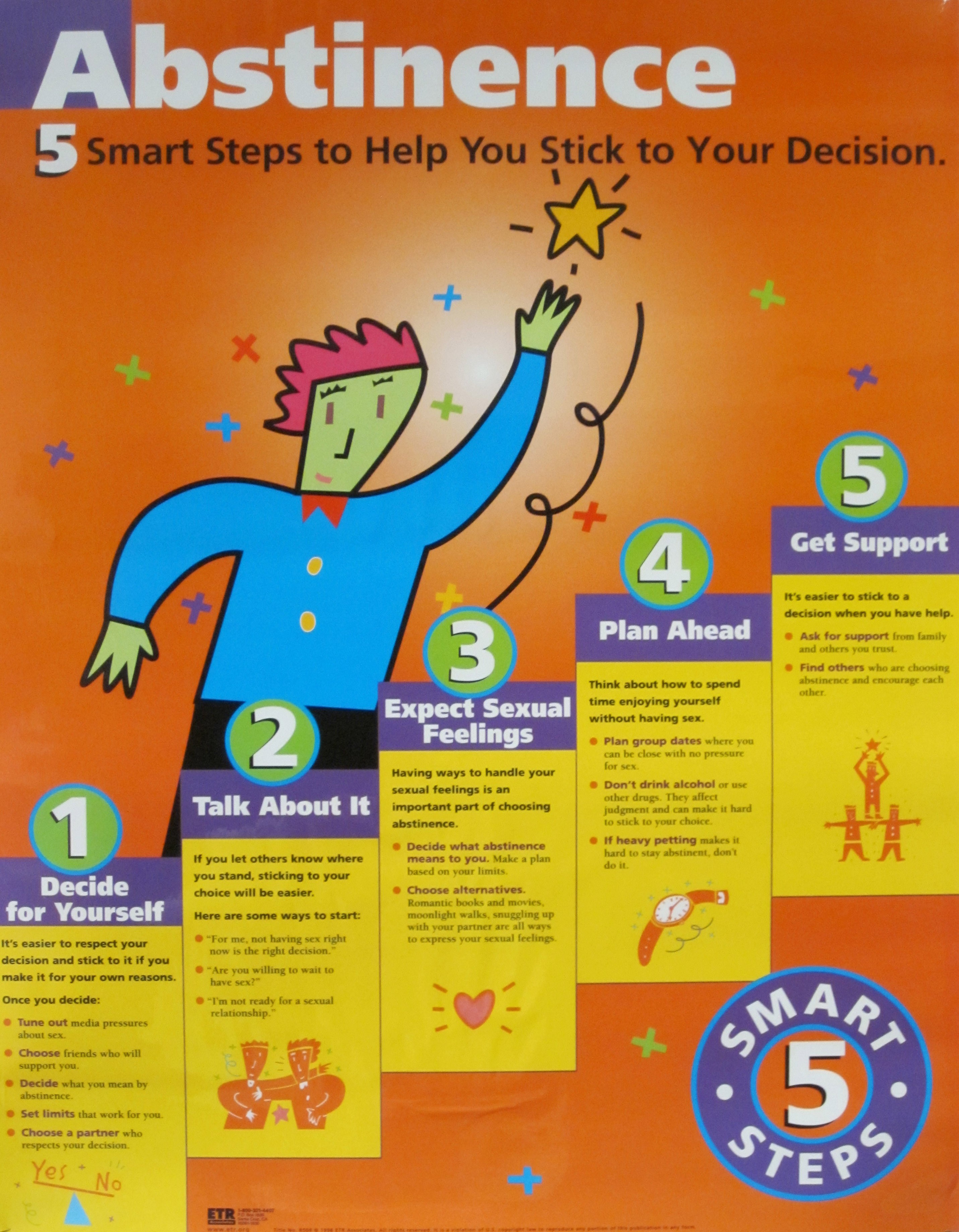
Unlike many other schools, Newark Academy has never had an issue with sexual education. There is no record of a student not willing to participate in the health program because of religious beliefs that go against the teachings. Ms. Spooner explains that the reason that NA is not afraid to go beyond abstinence teaching is “because [teachers] encourage critical thinking and decision making at NA [and] believe that students should have accurate information on which to base their behavioral decisions. [Teachers at NA] also encourage students to think about the consequences of any behaviors they choose to engage in from both physical and emotional perspectives for themselves and for others for whom their behaviors may have consequences or effects.”
Newark Academy’s scholarly disposition and emphasis on individual decision making has driven the health department to teach abstinence along with contraceptive methods and the consequences of sexual activity. By informing students of the repercussions of sex in high school instead of simply telling them to avoid it, Newark Academy is successful in persuading students to keep from engaging in activities that could have unfortunate consequences. Furthermore, in keeping with the school’s emphasis on independent thought, students’ are left with their own personal choices. In this manner, while our education forewarns and prepares us, we can still make our own decisions.
For more information about sexual education in high schools, go to:
http://siecus.org/index.cfm?fuseaction=Page.viewPage&pageId=523&parentID=477
http://www.aolnews.com/2010/02/02/study-teaching-abstinence-works-better-than-sex-ed/
http://www.npr.org/templates/story/story.php?storyId=1622610
Leave a Reply
You must be logged in to post a comment.