By Sara Widdmann ’15, Staff Writer
“I’m willing to pay the price for another woman’s son to come home and end the agony. Our hurt will never go away, but I just hope and pray with all my heart that Gilad comes home healthy in body and soul.”
Those are the words of Esther Wachsman, mother of Nachson Wachsman. Nachson was captured and then killed in 1994 by one of the 1,027 former prisoners recently released by the Israeli government in exchange for Israeli captive Gilad Shalit.
On June 25, 2006, the terrorist group Hamas abducted Shalit during a cross-border raid near the borders of Egypt, Israel, and the Gaza Strip. Over these past five years, Shalit was held prisoner within Gaza, his location unknown. During his imprisonment he was granted no visits from family members or medical care from the Red Cross. This past week, on October 18, 2011, Shalit returned alive to Israel in exchange for over 1,000 Palestinian prisoners. These aren’t just any prisoners; among them are convicted murderers, both men and women, who have attempted suicide bombings and committed other crimes against Israeli citizens.
Did the Israeli government make the correct choice? Was it truly worth it to trade one life for 1,000?
Many people have mixed views on this contradictory issue. Humanities teacher Mr. Goldfischer states he is, “Very conflicted. If my son were held captive for five years, I’d be all over the government to get him back. On the other hand, if my son was killed by one of the prisoners, I’d be very angry. However, no other country in the world would give up 1,000 murderers and terrorists for one soldier. It is truly no man or women left behind.” This is the constant reminder of the good and bad that comes out of this international occurrence. It shows how much value Israel places on the life of each of its citizens. But it also shows that the decision Israel made could have had calamitous repercussions in the future and cost other lives.
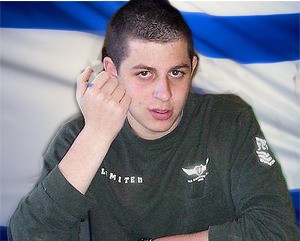
When students or faculty were asked about this issue, some were against Israel’s decision. For example, 10th grader Bill Ulrich says, “I think it was a silly trade by the Israeli government.” Bill expresses a valid point; some of the prisoners that are being freed are very dangerous; in total, the prisoners being released are tied to the deaths of 599 Israel citizens. Additionally, Ms. Snow, an English teacher, voices her concerns on the subject by pointing out that Israel “Could inadvertently be encouraging hostage taking to get the release of more people.”
However, a 11th grader who wishes to remain anonymous thinks, “It was a good move because it shows the value Israel puts into the lives of their own men. In the future it will improve Israeli soldiers because they will have more faith in their own government.” Shalit is not just a soldier; he is a son, a brother, and a friend. He returns home to people who have dearly missed him. This assures Israeli citizens that no matter the circumstances, their government will seek to protect its people in any way possible.
Israel’s decision exemplifies its loyalty to its people, but it also reveals the deep vulnerability of a country surrounded by enemies. Will it give Hamas a reason to capture more hostages from Israel in order release more prisoners? Was it truly worth it to trade one life for 1,000?
Leave a Reply
You must be logged in to post a comment.