By Varan Satchithanandan ’12, Commentary Editor
The days of the unskilled laborer appear numbered. Whether it’s Occupy Wall Street or the unions picketing Newark Academy, the lower-tier wage earners appear to be on the defensive.
At first glance, the economy seems to be doing quite well. In quarter three of the fiscal year, the gross domestic product exceeded that of 2007’s quarter four – when the recession began. Furthermore, the New York Times reported that consumer spending has increased and stores’ retail inventory has decreased.
Upon further examination, however, one finds that the employment rate is 4.5% lower now than it was pre-recession. Corporations are posting record profits despite having fewer workers in the market. To be clear, the unemployment rate is currently 9.1% – nearly twice as high as it was pre-recession, while profits have increased substantially. To incentivize corporations to reconsider the American worker as a source of labor, we must reexamine the minimum wage.
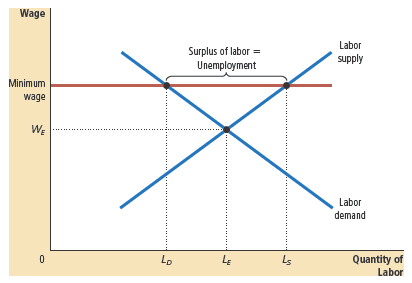
Simply put, a minimum wage will cause unemployment. Like all goods and services, the interactions between labor and management are subject to the laws of supply and demand. The workers supply, while the corporations demand. The wages that these corporations pay will be subject to the market. When a minimum wage is mandated, however, the demand for labor decreases substantially. The price floor causes an unnatural strain on the market. On average, studies indicate that a 10% increase in the minimum wage causes a 1 to 3% decrease in teenage employment, according to Harvard economist Gregory Mankiw. Often times, employers will outsource their labor to less-regulated areas, like China or India. The minimum wage is a rather poorly targeted attempt at combating paucity, as less than a third of minimum wage earners actually exist in poverty.
While eliminating minimum wage would potentially succor unemployment, to consider it would be an exercise in intellectual fantasy. Such a measure would cause politicians to lose many a blue-collar vote. But, it would doubtless serve to increase employment. Yes, it is not a flawless method. There will be some who will see their wages fall further. Some may say that this is the cold, economic view of labor as a commodity. But, as the economist Paul Krugman once said, sweatshops are preferable to unemployment.
Leave a Reply
You must be logged in to post a comment.