By Tyler Goff ’14 and Rebecca Gorelov ’14, Staff Writers
The annual Feinberg Family Multi-Cultural Assembly on December 2nd, in association with the Global Speaker Series, presented Mustafa Akyol as this year’s speaker. Based in İstanbul, Turkey, Mustafa Akyol is a political commentator, journalist, and author. He is a constant commentator in the Turkish media writing for two newspapers and appearing regularly as a guest on political discussion shows in his home nation. Akyol is also the recent author of Islam Without Extremes: A Muslim Case for Liberty (Available in the Hawkes Memorial Library). His book begs the question “Is Islam compatible with freedom?” Akyol takes a bold stance by arguing that only by accepting a secular state, can Islamic societies thrive.
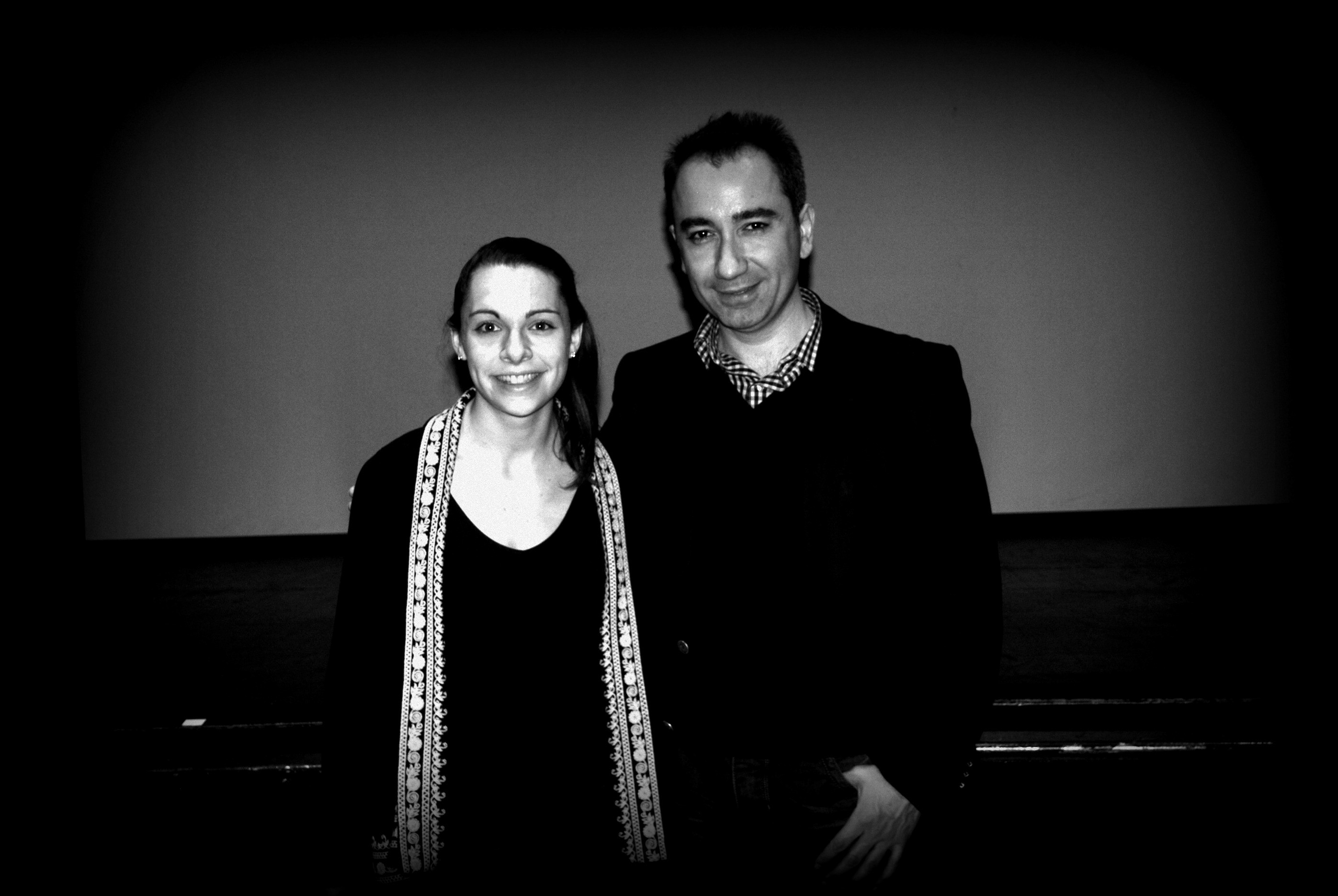
Akyol’s presentation revolved around the diversity and progressiveness of Turkey today as compared to other nations in the region. Akyol described Turkey as a “crossroad between Europe and the Middle East.” This diversity in his home nation dates back to the Ottoman Empire, the precursor to Turkey. As Akoyl explained, the Ottoman Empire covered most of the present day Middle East. While there was an abundance of religions and cultures, the Ottoman Empire did not persecute these groups – they openly advertised their openness and freedom. While toleration is not as widespread as during the years of the Ottoman Empire, there is to an extent religious freedom in modern-day Turkey.
Currently, the Middle East is in the midst of what is now being called the Arab Spring – a wave of revolutionary demonstrations and protests. These protests are directed against the dictatorial political structure in most Arab nations. Akyol believes that Turkey can serve as a form of “inspiration” for other Arab nations. Turkey is an example of a nation ruled by pious Muslims that were democratically elected, a nation with a good economy, and what he believes to be the sole Islamic Nation that maintains a good relationship with the West. He hopes that as a result of Turkey’s progressive stance more countries in the Middle East will follow in its footsteps.
In recent years, relations between Israel and Turkey have been strained. The deterioration in the relationship, according to Mr. Akoyl, began in 2010 when an Israeli operation resulted in nine Turkish civilian casualties aboard a ship belonging to the Gaza Freedom Flotilla in route to Palestinian Territory. The Turkish government made it clear that the incident had done considerable damage to the Turkish-Israeli relationship. Recently, Turkey has downgraded their contact with Israel to second secretary level and suspended all military co-operation between the two nations. As of now, Turkey is demanding compensation and a formal apology for the flotilla incident, but Israel has declined numerous times. Akoyl believes the current stage in their contact is “sad, but temporary.” In the end, Turkey’s government still supports Israel’s right to exist but continues to supports a two-state solution.
Turkey’s relationship with Iran is just as complicated. Turkey views Iran as “a troublemaker” as Mr. Akoyl described, and does not want Iran to hold nuclear power. At first Turkey believed it would be be beneficial to have peace talks with Iran rather than imposing sanctions. However, due to the ineffectiveness of the talk and diplomatic pressure from both the European Union and the U.S, Turkey chose to endorse the sanctions on the Persian nation. Recently, Vice President Joe Biden visited Turkey with the intent to persuade the Turkish government to approve yet another round of sanctions.
Overall, the student body has had a mixed response to the presentation. While most students enjoyed it, some thought it could have been more opinionated. Sydney Mann ‘14 said, “I like the Global Speaker Series to be controversial but for me this one wasn’t very opinionated as much as it was informative.” However other students believed that his main points took a new and distinct approach on the Middle East. Rachel Greene’13 felt, “He had a unique perspective and I think what he said established a great context for understanding events in Turkey.” Fellow junior Greg Melillo said, “Akyol’s most valuable point, especially with what is going on in the Middle East today, is the importance of learning about the different sides of a culture before you judge it.”
The NA community as a whole benefited from this global speaker presentation. Not only was it extremely relevant and timely in light of the Arab Spring, but it also brought forth a valuable perspective on the Middle East from a country that is caught in the “crossroads between Europe and the Middle East.” In this day and age, when the Middle East dominates our news media, it is refreshing to hear news about the Middle East from a perspective other than our own.
Leave a Reply
You must be logged in to post a comment.