By Allie Singh ‘25, News Editor

Image Courtesy of Wired UK
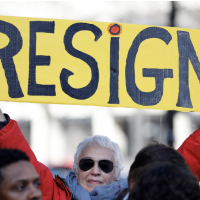
The Great Resignation is the moniker given to the record number of workers that voluntarily left their jobs during the COVID-19 pandemic. In the midst of the pandemic, workers sought job flexibility and higher pay as a means to adapt to the challenges imposed by the spreading virus. No position, including that of world leader, was left untouched by the economic, political, and social challenges presented by the pandemic. While some world leaders were able to quickly adapt to these stressors and implement effective solutions, others were less successful and lost the support of their constituents. In the last year, the world witnessed the resignations, in this case involuntary, of three prominent leaders: the United Kingdom’s Prime Minister Boris Johnson, Sri Lanka’s President Gotabaya Rajapaksa and Italy’s Prime Minister Mario Draghi.
In June 2022, Boris Johnson’s Conservative Party delivered a vote of no-confidence for their leader, who, only three years earlier, had won the general election in a landslide due mainly to his vow to finalize BREXIT, the referendum seeking to establish the UK’s exit from the European Union. Despite the fact that BREXIT was ultimately passed and finalized in December 2020, Johnson drew the ire of UK residents after he violated COVID-related lockdown rules multiple times during the pandemic. While the rest of the population faced harsh restrictions and fines for violating such protocols, Johnson attended multiple gatherings and hosted parties at his Downing Street residence, which irked his supporters and members of Parliament. His support waned further after appointing Chris Pincher as deputy chief whip, despite being aware of sexual misconduct charges against Pincher. After over 50 members of Parliament resigned in a span of two days, Boris Johnson’s government was inoperable and he agreed to resign once a successor was chosen. On September 6, Liz Truss became prime minister. Ironically, she too was forced to resign on October 20, 2022 after only 44 days in office.
On July 14, 2022, Sri Lanka’s elected president since 2019, Gotabaya Rajapaksa, resigned his post and fled the country due to mass protests and violence that erupted in early 2022 in response to the dire economic circumstances plaguing the country. This economic instability stemmed from the war in Ukraine, which caused rising costs and shortages in resources such as fuel, food and basic supplies. At the same time, the nation was still reeling from the slow investigation of the 2019 Easter church bombings that killed 269 people. This terrorist act inflamed tensions between the country’s Christian, Muslim, Hindu, and Buddhist population and the slow investigation roiled citizens and hindered tourism to Sri Lanka. As a result, Sri Lanka defaulted on its sovereign debt obligations for the first time in its history in May 2022 when the government suspended debt payments in order to preserve cash for needed goods. On July 21, Rajapaksa was replaced by his prime minister, Ranil Wickremesinghe, who finished the displaced leader’s term. While the protests and violence have curtailed somewhat, it is unlikely that Wickremesinghe will gain public support, as civilian protestors burned his residence to the ground during the summer protests because of his ties to Rajapaksa.
Mario Draghi was appointed Italy’s prime minister in February 2021 and was universally backed by the country’s four major parties. During his term, he helped revive COVID-19 vaccination efforts and effectuated an economic plan that included receipt of $194.0 billion of pandemic recovery funds from the European Union, subject to implementation of various reforms of the country’s public administrations and education and healthcare systems. As a former chief of the European Central Bank, Draghi was widely viewed as capable of stabilizing the EU’s third-largest economy post pandemic. However, his economic efforts faltered when the Five Star Movement, a populist party, boycotted his economic plan because they did not agree with the government’s stance on shipping weapons to Ukraine, and they opposed its inclusion of a waste generator in Rome. After a voting stalemate, Draghi offered his resignation on July 15, 2022 because he did not think that it would be possible for his economic plan to succeed without unanimous support. On September 25, Giorgia Meloni, the leader of the far-right political party the Brothers of Italy, was elected to be the new Italian Prime Minister.
Almost three years have passed since the start of the COVID-19 pandemic. During that time, nations and governments continued to face ordinary economic, political, and social issues that were exacerbated by the unprecedented and tumultuous effects that the pandemic left in its path. Just as individuals had to adapt their lifestyles to the pandemic, governments also needed to adapt. Ms. Fischer of NA’s Humanities Department noted, “I think COVID presented a disproportionate challenge….policies that worked in a non-crisis situation proved not to work during this emergency.” The popularity of these leaders who were widely supported prior to the pandemic waned, and ultimately new candidates were elected to govern and start to mend these affected nations.
Leave a Reply
You must be logged in to post a comment.